


Humidifiers – the guardian angels of wooden instruments

You might think that way when your skin is a bit dry and dull during the winter, but most people just think that it's the cold that's bothering you. If you work with wood, or just have a lot to do with things made of wood, it becomes a bit more of a reality than that. Especially if you're working with instruments made of wood, which many of us instrument enthusiasts do. Then humidity becomes something we have to deal with and sometimes even fix.
Whether you like it or not, humidity affects everything made of wood. Tables, floors, ceiling beams, wooden instruments, etc., simply everything made of wood is affected. If the humidity is high, wood swells (expands) and if the humidity is low, wood shrinks (contracts) and can crack. And as if that weren't enough, the changes between high and low humidity (or vice versa) make wood easily twist and/or become warped. This is an indisputable fact that we with wooden instruments must be aware of.
Up here in the dark Nordic countries we have a lot of variation in humidity, quite high in the summer, very low in the winter and very variable during spring and autumn. We simply have to both take into account and remedy humidity if we want our wooden instruments to function as intended and not break. Everyone who has played for a while has experienced problems such as protruding fret ends, necks that move a lot and constantly need to be adjusted to avoid chattering or becoming impossible to play on, fingerboards that crack, bodies on acoustic instruments that crack or fall apart, frets that come loose, etc. etc. None of this has to do with the quality of the instruments, wood just behaves that way if you don't take care of it properly. For this very reason, dry cracks or other humidity problems are not covered by the warranty on instruments as the faults are considered self-inflicted faults, handling errors. That particular aspect is especially important to keep an eye on, namely humidity, if you buy more expensive, solid instruments.
Let me briefly explain why.
That an acoustic instrument is solid means that, for example, the top is carved from a single piece of wood. If the entire instrument is solid, the sides and bottom are also made from a single piece of wood. Completely solid acoustics are only found in more expensive instruments. It is a much more expensive manufacturing method. The other option is that the instrument is built from laminated wood, such as plywood, which is a much cheaper and simpler construction. The difference between solid and laminated instruments is that solids sound better, have better dynamics, and are simply much better sounding instruments in every way. The disadvantage of solids is that they are much more fragile than laminated ones. Laminated wood does not crack as easily as the glue in the laminate helps to “hold it together”. But even laminates break if they are really dry.
The following errors are examples of errors that are often humidity-related and are not covered by the warranty.
- Cracks in the wood. Most often occurs in the top of acoustic guitars/basses/ukuleles etc. or in the fretboard of all instruments that have fretboards. Sometimes the body also cracks on solid electric guitars/basses.
- Cracks in the varnish. Can happen anywhere on the instruments, the wood shrinks when it dries, the varnish does not shrink with it and cracks.
- Defective necks. Necks that are twisted, hump or bend forward or backward. This defect is not always due to humidity, but most often.
- Frets that come loose or creep up. When they creep up, you get a squeak when playing the frets right behind them. When the wood in the fretboard dries and shrinks, the metal in the frets doesn't follow suit. When humidity increases and the wood expands, the wood then expands and can no longer hold the frets in place.
These are just a few examples of errors that occur from instruments that are too dry.
Another problem worth mentioning is tuning stability. In the same way, shrinking/expanding wood can affect the tuning stability of the instrument if/when screws come loose. Tuning screws, bridge screws, yes all screws that are attached directly to the wood are affected. It is a fault that is easily fixed but can drive you crazy before you figure out what the fault is. Especially when the nuts that lock the tuning screws on the head (from the front) come loose a little, the tuning changes significantly when the tuning screw moves at a bend or in the worst case if you just bump the instrument.
These are just a few examples of errors that occur from instruments that are too dry.
In order for our instruments to feel really good and play as we expect, they should be in a constant humidity of 45-50%. It should not fall below 45% nor rise above 50% for any extended period. We simply want the humidity to be between 45 and 50% at all times. It is much worse for the humidity to be too low than too high. In Swedish summers it sometimes rises well above 50% but that is nothing to be alarmed about as long as the humidity does not go up and down like a yo-yo (which it very rarely does). If you have really expensive treasures, you should also take care of this by storing the instruments in humidity-controlled rooms that are more or less the same all the time.
Primarily, it is the cold seasons that are a problem, from around October to March/April (depending on where in the country you live). Then the air becomes the driest because we heat the houses where we live and it becomes more noticeable the further north you live. Then the humidity is often extremely much lower than desired, often below 10%, which for instruments is far below harmful levels. It is enough for a nice acoustic guitar with a solid lid to be stored in such an environment for a few days and it will crack, the bridge will come loose, the sides will drop or something else you really don't want. So this makes keeping the moisture level up in the wood of the instrument very important. In the past, people hung water containers on the radiators to bring up the humidity, which doesn't work well enough for an instrument, but fortunately, there are now significantly better solutions, so-called "humidifiers". Humidifiers range from simple models that add moisture and cost very little to more advanced models that both give and take moisture (keep the humidity constant) that cost a little more. Considering the cost of your instrument, any humidifier is a steal for keeping up with your instrument. It's such cheap insurance that there's no reason not to take it.
Let's look at different humidifiers, how they work, and how best to use them.
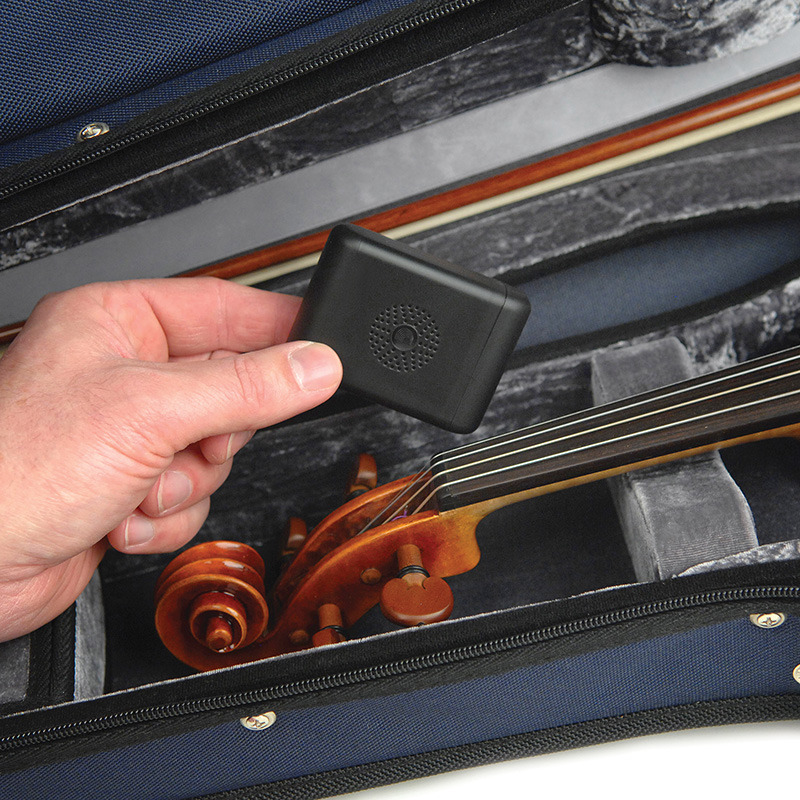
Before we dive into specific models, let's go over some general things that apply when using all of them. Almost all things in a normal home affect the humidity in the room, furniture, fabric, walls, floors, everything made of wood, etc. are affected by the humidity in the air. This means that during dry periods of the year, those things will also dry to the same level as it is in the air. This in turn means that if you place a general humidifier in the room, those gadgets, furniture, etc. will also take moisture from the humidifier and more or less empty it immediately. Since the air in the room is constantly being replaced, a humidifier for string instruments will not have the capacity to keep everything in there at a good level. To work around this, you have to limit the space where the instrument(s) is located as much as possible. The easiest and best place to store instruments is an instrument case/case (NB, not a gigbag), a cupboard or a wardrobe (no, you don't have to sit in the wardrobe when you play the instrument). You take it out when you want to play it and put it back when you're done, always.
It's that simple.
You put the humidifier in the space/case where the instrument is to be stored. The only thing you need to do then is keep track of when it needs to be refilled. It is worth mentioning that the guitar case or other things in a cupboard/wardrobe also need to be humidified before everything works properly. So just when you start, the humidifier will empty quickly and need to be refilled often, but it is quite quick to get everything up to a good level. If you start looking after your instruments before they are completely dry, this "humidification process" is not needed.
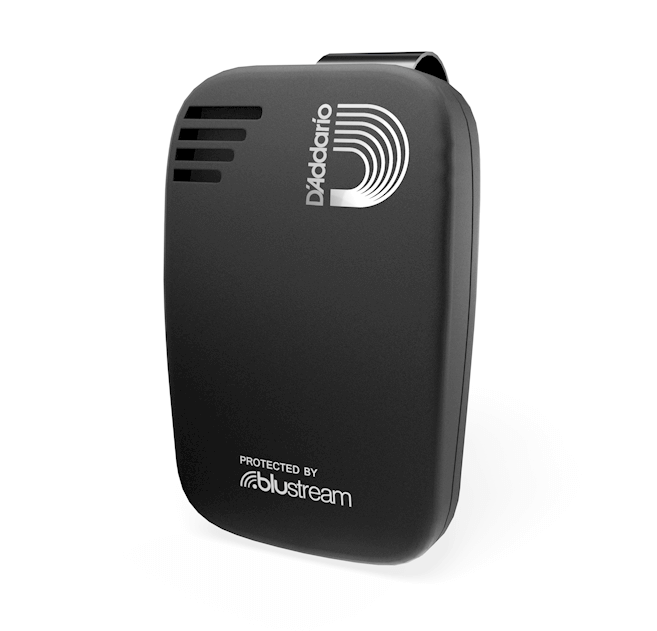
To make this easier, it's really worth investing in a hygrometer that keeps you up to date on the humidity. As soon as it starts to get too low (or too high), you know you need to take action. We recommend PW-HTS Humidity & Temperature Sensor , it is reliable and accurate.
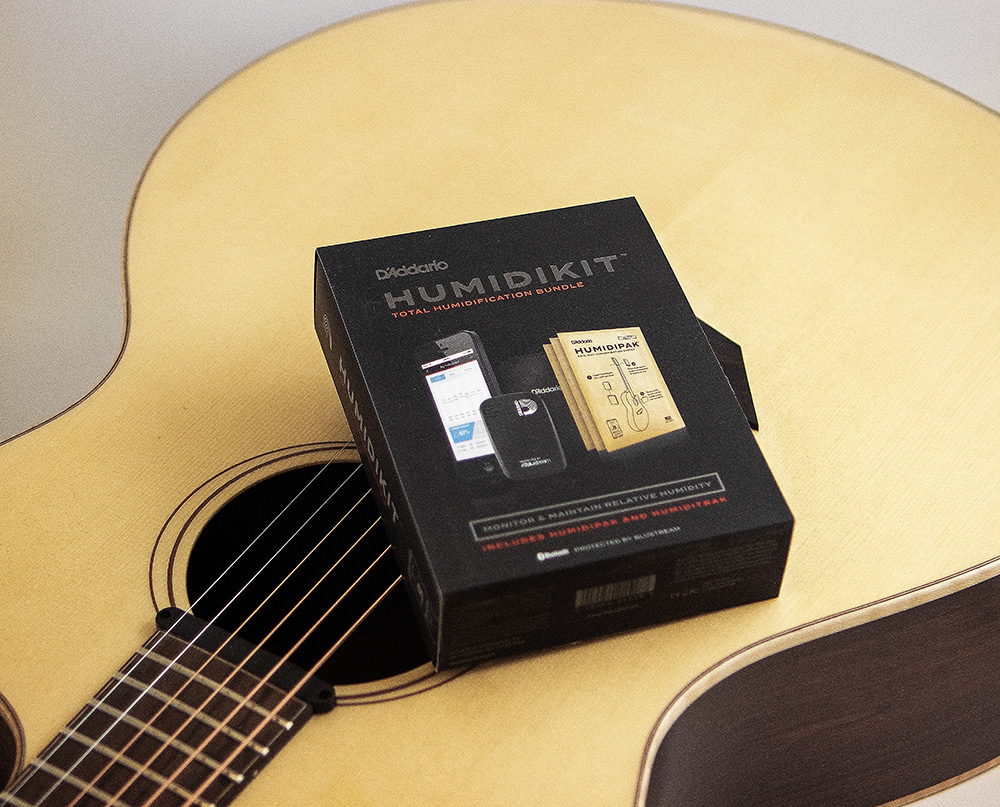
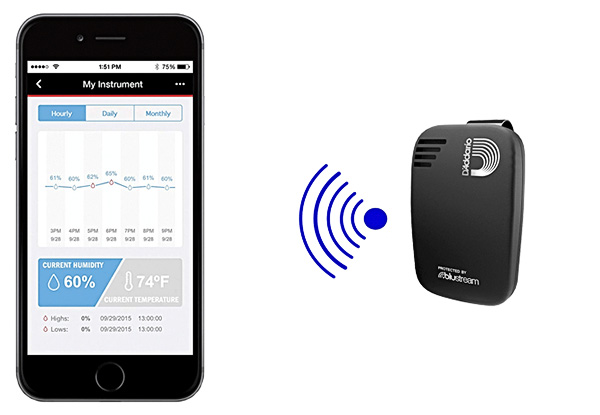
If you want to go all-in and have total control, you should look at PW-HTK-01 Humiditrack Bluetooth Humidity & Temperature Sensor . It is a hygrometer that communicates with a free app on your smart phone with built-in Bluetooth. You constantly get an update on how the instrument/instruments are doing every time you get close to them. As soon as it approaches a situation where you need to act, the app warns you about it. If you have more expensive instruments, it is worth having a Bluetooth sensor per instrument, the app can handle several at the same time. Then you get a warning as soon as something is wrong with any of the instruments. You get total and absolute control over how the instruments are doing and know exactly when you need to fix something. An ingenious solution if you are worried about your instruments.
So now, let's look at some different models to choose from.
|
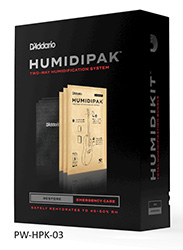
PW-HPK-03 Humidipak Restor e Kit |
 |
|
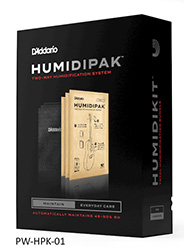
PW-HPK-01 Humidipak Maintain kit This works in the same way as the PW-HPK-03 above, with the difference that instead of just providing moisture, it also takes moisture if the humidity rises too high. It therefore keeps the humidity at the instrument constant at 45-50% humidity. You should not start humidifying a dried-out instrument with these because then they will empty immediately. Done correctly, you start by first humidifying with HPK-03, then a bag of HPK-01 lasts 2-6 months (you get 3 bags in the packages). Refill bags are available and are called PW-HPRP-03 . |
 |
Start with PW-HPK-03 until the moisture level is at 45-50% and then switch to PW-HPK-01.
If you start humidifying your instrument before the air humidity has dropped too low (keep an eye on your hygrometer), you can skip the Restore (PW-HPK-03) step and go directly to Maintain (PW-HPK-01).
Important: If you break the packaging of a bag, it will start working immediately whether it is in a guitar or on the coffee table. So always store opened bags of both models in an airtight, sealed bag.
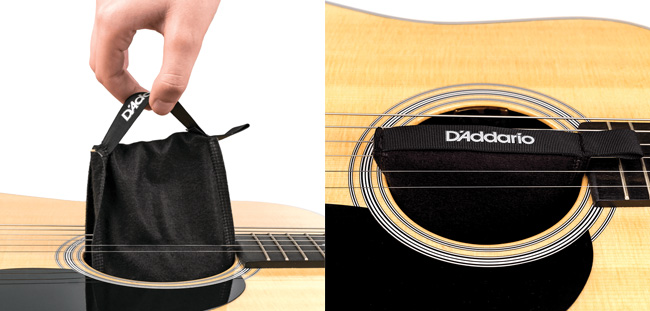 |
Both the Restore and Maintain kits work like this. - Break open a package and take out the bag inside. - Stuff that bag into the included cloth bag. - Hang it by the strings as shown in the picture. - If you got the HPHT kit, you put the transmitter where the guitar is. Make sure it is connected to your phone first. The app is where you find apps for your smart phone. It is called “humiditrak”. |
If you ask about humidifiers on instrument forums around the world, there will always be some “I’ve never had a humidifier and never had a problem, humidifiers are not needed” answers. But it’s an answer along the lines of “I’ve never had burglary insurance and never had a burglary, insurance is not needed” or similar stupidity. Humidifiers are such an incredibly cheap protective measure to prevent crap from happening to your instrument that there is no sensible argument not to have one. And unlike burglary insurance that only replaces parts of what is stolen when crap has happened but doesn’t protect you from it happening, the humidifier is a protection against it not happening. Of course, provided you take care of it, just buying it won’t help.
Humidifiers cannot be described better than as the guardian angels of wooden instruments, very effective angels that exist and are available for purchase.